

The Operating Room Might Be The Most Complex Workflow Environment In Healthcare
And yet some hospitals are not using the power of location to streamline efficiency and optimize workflows.
When everything works, the system feels seamless. When it doesn’t, the impact shows up quickly:
- First cases start late
- Turnover between surgeries takes longer than expected
- Staff spend time tracking down updates instead of focusing on care
Most hospitals already know these problems well. The challenge is that coordination still relies heavily on phone calls, manual updates, and fragmented systems.
This is where workflow orchestration is starting to change things.
From Visibility to Workflow Coordination
Hospitals are increasingly looking at how real-time operational data can improve patient flow. Many organizations are investing in solutions that improve visibility across clinical processes because effective patient flow is often the difference between bottlenecks and efficient care delivery.
When clinical teams can see exactly where patients, staff, and equipment are, coordination becomes easier. But visibility alone is not enough. The real opportunity comes when that information drives the next action automatically.
That is the idea behind workflow orchestration.
Instead of relying on manual communication, hospitals can connect location intelligence, clinical milestones, and operational systems so the next step in care happens automatically. Workflow-focused RTLS applications help transform real-time operational data into automated actions, reducing the need for manual intervention and improving coordination across teams.
For example:
- When a patient leaves the operating room, environmental services are notified to begin room turnover
- When the room is ready, the next surgical team receives an update
- When the next patient arrives in pre-op, transport and surgical staff are alerted
Each step happens automatically as events occur.
How SonitorONE Supports Patient Flow
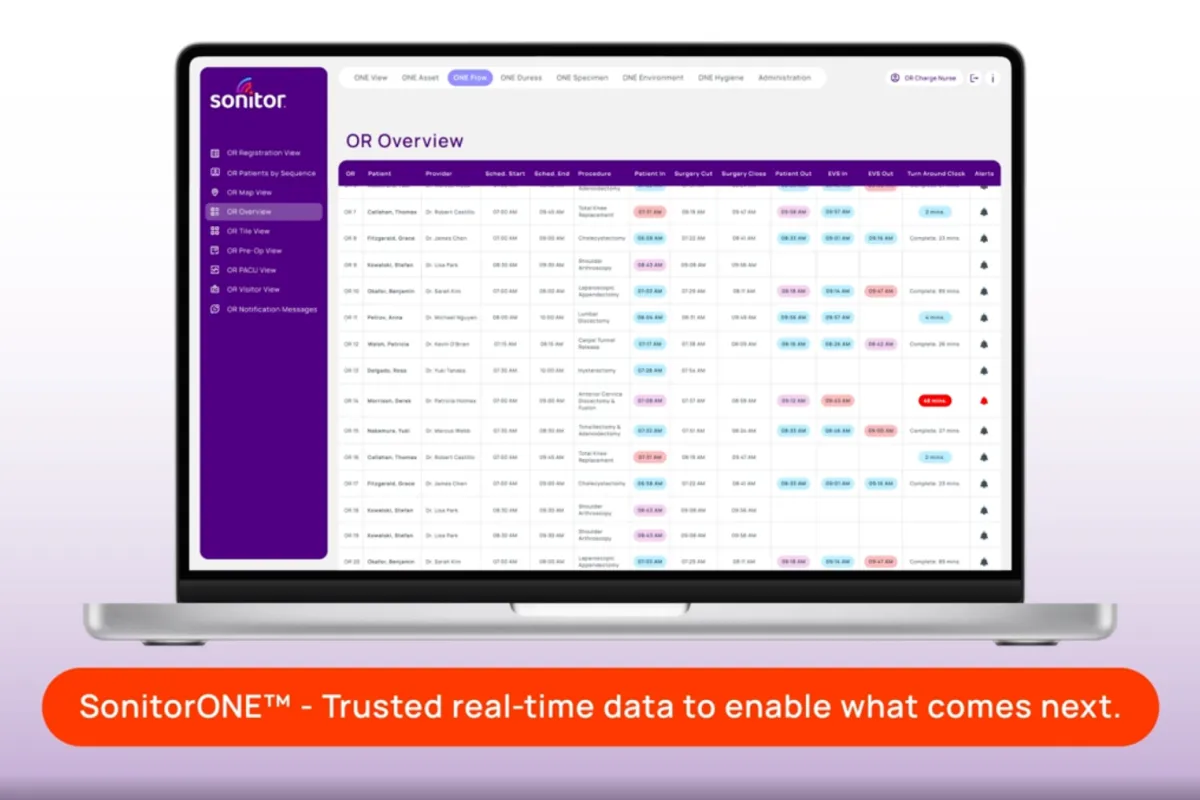
The SonitorONE platform connects location intelligence with hospital workflows so teams always know what is happening and what comes next.
SonitorONE’s ONE Flow capability helps hospitals:
Create a real-time picture of hospital workflows
The platform captures clinical milestones and location events across departments, giving teams a live view of patient progress and room status.
Trigger automated notifications
When a patient moves or a room changes status, the system can automatically notify transport teams, environmental services, or clinicians. This removes the need for manual calls or texts.
Connect systems across the hospital
SonitorONE integrates with EHR platforms such as Epic, Oracle-Cerner, and others so operational workflows stay aligned with clinical data. This level of interoperability relies on a robust integration layer capable of sharing information between location services, workflow applications, and clinical systems.
Turn workflow data into insight
Every step in the patient journey is captured. Hospitals can analyze metrics like on-time starts, turnover time, and discharge delays to identify improvement opportunities. Healthcare organizations have already demonstrated the impact of this approach. For example, Altru Advanced Orthopedics improved patient flow with RTLS by increasing visibility into patient movement throughout the care journey. With better awareness of patient status and location, staff could coordinate the next steps in care more effectively, reducing delays and improving throughput. This illustrates how real-time operational visibility can help healthcare teams keep patients moving efficiently through complex workflows.
A Platform Designed for the Whole Hospital
One reason patient flow improvements can be difficult is that workflows rarely stay within one department.
A surgical case touches registration, pre-op, the operating room, PACU, and inpatient care. Emergency departments, infusion centers, and imaging departments face similar coordination challenges.
SonitorONE was designed to support these connected workflows. The platform combines multiple location technologies with enterprise workflow applications to improve visibility and automation across the hospital.
The goal is simple. Help care teams stay aligned as patients move through the system.
The Bigger Opportunity
Healthcare operations are becoming more connected and more data-driven.
Hospitals already collect enormous amounts of information. What they need is a way to turn that data into clear operational signals that help teams work together.
When location intelligence and workflow automation come together, hospitals gain something powerful. Not just a map of what is happening, but a system that helps coordinate what should happen next.
And that is where patient flow begins to improve.